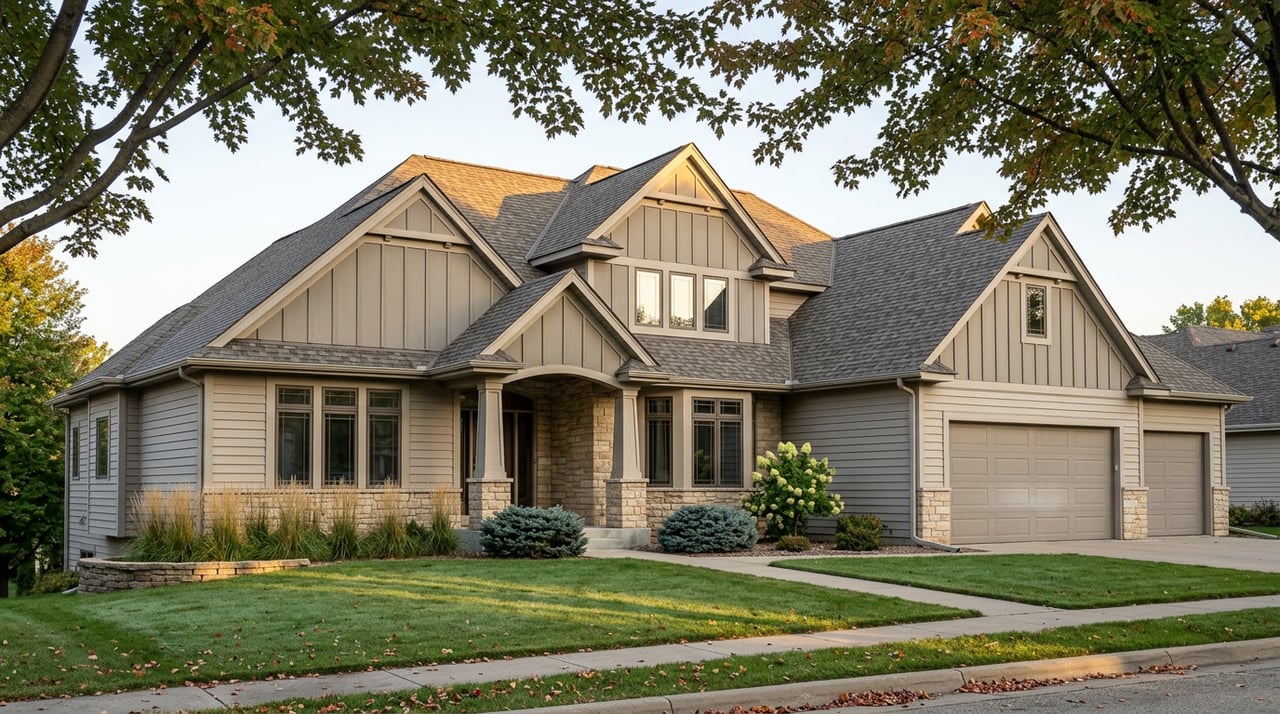
Two buyers walk into the same price range this month, one shopping new construction near Centerra, the other eyeing an older ranch near Lake Loveland. Same budget, same lender, same pre-approval letter. They pull up listings priced within a few thousand dollars of each other and start comparing square footage, finishes, lot size. What neither one checks first is the one number that will actually decide which house costs less to live in: the tax bill that shows up after closing, not the one printed on the listing sheet.
That's the trap in Loveland right now. The city's median sale price has drifted somewhere between $490,000 and $550,000 depending on which tracker you check and which month it covers, with one report putting the three month median near $490,000 through April 2026 and another pricing July's median list closer to $549,000. Those numbers get all the attention. They're also the wrong place to start if you're deciding between Loveland's east side, west side, or the older core in the middle.
The Same Price, Two Different Tax Bills
Here's the mechanism that actually separates neighborhoods here. A lot of Loveland's newer east side construction, especially in Centerra and the newer Centerra South expansion, sits inside metro districts. These are special taxing entities that developers set up to finance roads, water lines, and other infrastructure through bonds, then repay over time through an added property tax mill levy layered on top of the standard city and county rate.
When Loveland's city council approved the metro districts for Centerra South back in 2023, the financing documents laid out the actual math. At the city's base rate of 79.5 mills, a home generates $2,763 in annual property tax. Add the metro district mills approved for that development and the same home's tax bill climbs to $4,848 a year. That's not a rounding error. That's an extra $174 a month, every month, for as long as the district's bonds are outstanding, which under Colorado's special district rules typically runs 20 to 30 years and sometimes longer. The exact mills in force today should be confirmed with the district or the county assessor, but the mechanism hasn't changed: a second mill levy stacks on top of the base rate for as long as the bonds are being repaid.
None of that shows up in a listing's price per square foot. It shows up in your escrow account three months after you move in.
Why the East Side Got Built That Way
Metro districts exist because they let developers build faster without waiting on city or county budgets to fund the infrastructure first. The district issues bonds, the bonds pay for streets and pipes and parks, and future homeowners repay that debt through their property tax bill instead of the developer folding the full infrastructure cost into the sale price. That's part of why new construction in Centerra and similar east side communities can look more affordable on a price per square foot basis than comparable homes elsewhere in town. Some of that build cost got financed forward instead of priced in up front.
It's not a bad system. It's how a lot of growth gets built in Colorado right now. But it means the sticker price on an east side new build and the sticker price on a comparable west side or central home aren't measuring the same thing. One of them has a second, less visible tax bill attached that the other doesn't.
What the West and Central Sides Charge You Instead
Head the other direction and the cost shows up in a different line item: insurance.
Loveland sits inside what industry analysts call hail alley, a corridor running through Colorado, Wyoming, and Nebraska that sees more large hail events than almost anywhere else in the country. The Colorado Division of Insurance has found that hail damage accounts for an average of 26 to 54 percent of a typical homeowner's annual premium in this state. Local estimates put Loveland's premiums running 15 to 25 percent above the broader Front Range average because of that exposure, with statewide averages for 2026 landing somewhere between $4,200 and $5,200 a year depending on a home's specific risk factors.
Push further west, toward the golf course streets near Mariana Butte or the foothill edges by Devil's Backbone and Horsetooth Reservoir, and wildfire risk gets added on top of the hail exposure that covers the entire city. Older homes in the central core near Lake Loveland and the Downtown 4th Street corridor carry their own version of the same math: original roofing, older electrical, and plumbing systems that carriers price differently than a 2020 build in Centerra, even before hail enters the conversation.
State lawmakers are actively working on this. A bill introduced this year, sponsored in part by a Loveland-area senator, would create a grant program funded by a small fee on every homeowners policy in the state to help pay for hail-resistant roofs, on the theory that fewer claims eventually means lower premiums for everyone. It passed a Senate committee in April 2026. Whether it becomes law and whether it moves the needle on your specific premium is still an open question, which is exactly why it belongs in your due diligence conversation rather than your assumptions.
Comparing the Real Monthly Number, Not the List Price
| Where | What you'll find | The cost that doesn't show up in the price |
|---|---|---|
| East (Centerra, Centerra South) | Newer patio homes and townhomes, quick access to I-25 | Metro district mill levy on top of standard property tax, often for decades |
| Central (Lake Loveland, Downtown 4th Street) | Mid-century ranches, older housing stock, walkable core | Insurance pricing shaped by roof age and original systems, plus citywide hail exposure |
| West (Mariana Butte, near Devil's Backbone and Horsetooth) | Golf course lots, foothill views, quieter streets | Wildfire risk layered on top of the same hail exposure that covers the rest of town |
None of these costs are disqualifying. They're just invisible until someone asks about them, and the listing price was never built to disclose them.
Five Questions to Ask Before You Write an Offer
- Is this specific parcel inside a metro district, and what is the current mill levy on top of the base city and county rate
- How much longer does that district's bond debt run, and is there a scheduled increase built into the service plan
- Get an actual homeowners insurance quote on the address before you write the offer, not after you're under contract
- Confirm whether the property carries an HOA, a metro district, or both, since they are separate obligations that can stack
- For homes near Devil's Backbone, Horsetooth, or the Big Thompson corridor, ask directly whether the parcel sits in a mapped flood or wildfire risk zone
Your title company and lender will surface some of this during underwriting. Waiting until then means you find out after you've already fallen for the house.
What This Means If You're Weighing Loveland Against Fort Collins or Windsor
Zoom out one level and the same lesson holds regionally. In January 2026, one national market tracker put Fort Collins' median sold price near $545,000 and Windsor's near $635,000, against roughly $522,450 in Loveland over the same window. On paper, Loveland reads as the value play in Northern Colorado. Once you account for which pockets of Loveland carry metro district taxes and which carry higher hail and wildfire exposure, the actual monthly cost comparison against a similarly priced home in Fort Collins or Windsor gets a lot less obvious. The city with the lower median isn't automatically the cheaper city to own in. It depends entirely on which few blocks you're comparing.
A Few Questions Worth Answering Directly
Does every new community in Loveland have a metro district? No, but it's common in larger master-planned developments, particularly Centerra and Centerra South. Smaller infill projects may not carry one. Ask your title company for the special district disclosure on any specific address rather than assuming based on the neighborhood name alone.
Is hail insurance really that much higher here than nearby towns? Loveland's position in the hail corridor is well documented, and multiple industry sources put its premiums above the regional Front Range average. Your exact number still depends on your roof's age, material, and claims history, which is why a real quote beats a rule of thumb.
Can a metro district tax ever go away? Only once the district's bonds are fully repaid, which the service plan typically sets at 20 to 30 years from formation, though terms can run longer. Ask the district or the county assessor for the current payoff timeline before you assume it's a short-term add-on.
The house that looks cheaper on the listing sheet and the house that's actually cheaper to own for the next decade are not always the same house. If you're comparing Loveland's east side against the west side or the older core in the middle, that's exactly the kind of math worth running before you fall for a floor plan. Robert Crow walks Northern Colorado buyers through that comparison street by street, tax district by tax district, so the number you fall in love with is the one you'll actually be paying.