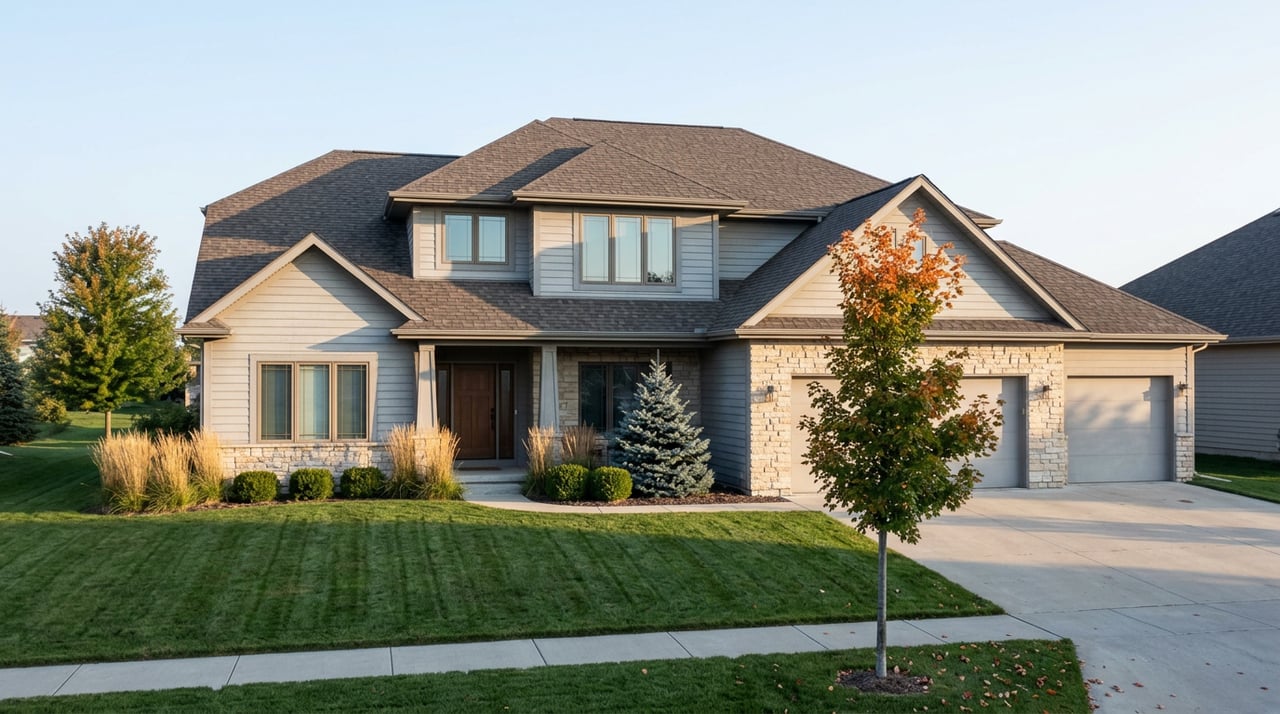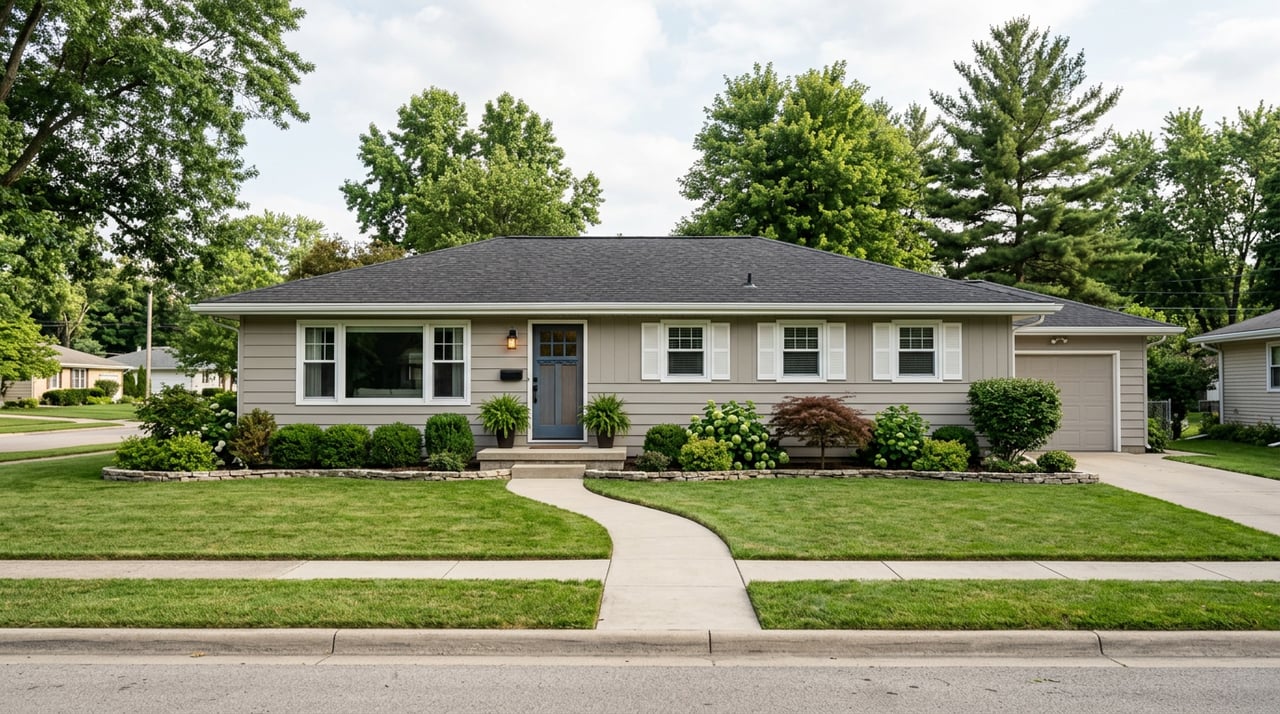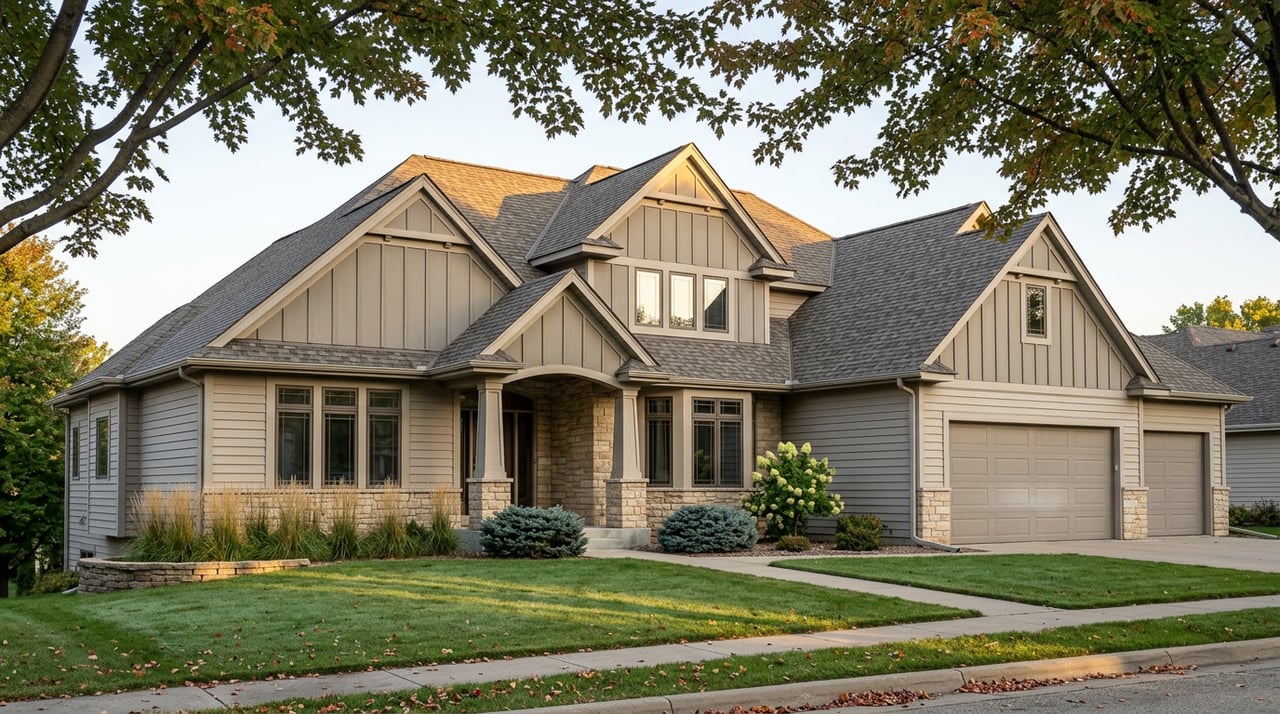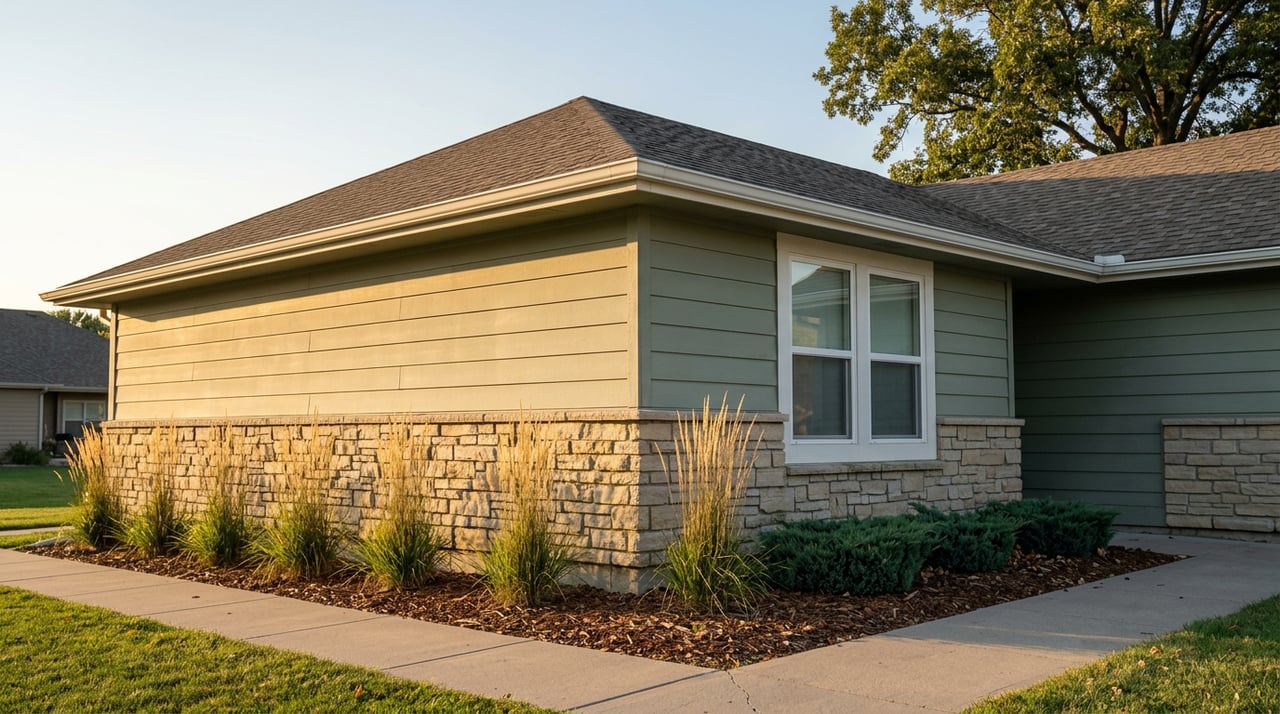
How old does a house have to be before Fort Collins treats it as historic? Not Victorian-old. Not gingerbread-trim, wraparound-porch old. The city's answer has nothing to do with style and everything to do with a birthday: fifty years. Once a structure crosses that line, the city requires a review before you can make exterior changes to it, whether that structure is a landmarked bungalow two blocks from Old Town Square or a plain brick ranch in a subdivision that has never once been photographed for a postcard.
That distinction matters right now in a very specific way. Any Fort Collins home built in 1976 or earlier turned 50 sometime in the last few years, and every year that follows quietly pulls another ring of subdivisions into the same review process that governs Mountain Avenue's Victorians. A seller planning to swap out tired windows or reside a house before listing may assume this rule is someone else's problem, the kind of thing that only applies to obviously old homes downtown. That assumption is the trap.
Fifty Years Is a Moving Target, Not a Neighborhood
Fort Collins' historic preservation program traces back to 1968, when the City Council passed the original preservation ordinance and created what was then called the Landmark Preservation Commission. The city renamed that body the Historic Preservation Commission in 2021, though plenty of longtime contractors still use the old name out of habit. What hasn't changed is the trigger for review: it is age-based and citywide, not limited to designated landmarks or historic districts.
The city currently maintains 324 individually designated historic properties and four historic districts. That sounds like a small, contained list, and for landmark status it is. But the review requirement for exterior alterations sweeps in far more properties than that list suggests, because it applies to any building 50 years or older, designated or not. A home doesn't need a plaque or a spot on the National Register to trigger the process. It just needs a birth certificate old enough.
That's a different situation than most sellers picture. Someone with a 1970s ranch on the south side of town, nowhere near Old Town's brick storefronts, may still be required to go through review before replacing siding or windows, simply because the calendar caught up with the house.
What the Review Actually Involves
The process itself isn't a rejection machine. Most projects on non-designated properties clear it. But it does add steps, and those steps take time that a seller working against a listing date doesn't always have.
Here's the shape of it. A homeowner submits a written narrative of the proposed changes along with exterior photos and plans to the city's Historic Preservation Division. From there, the Director of Community Development and Neighborhood Services and the Chair of the Historic Preservation Commission evaluate whether the property is historically significant and how big the proposed project is. If they determine the changes are minor and the property isn't a strong landmark candidate, the homeowner is free to proceed. If the project involves major exterior alterations, or the property looks like a potential landmark candidate, it moves into a deeper evaluation, and from there into design discussions, and in some cases a public hearing with neighborhood notification.
None of that is designed to punish sellers. It exists because the city has spent decades protecting neighborhoods like the Old Town Historic District, listed on the National Register in 1978 and followed by the state's first City Historic District in 1979, and the Laurel School National Register Historic District, which covers more than 600 properties and was listed in 1980. But the process doesn't know or care whether the house in question looks like it belongs in that lineage. It only checks the birth year.
The Precedent Sitting in a 1950s Ranch Subdivision
If you want proof that this isn't just a downtown-bungalow issue, look at Sheely Drive. The Sheely Drive Landmark District, designated by City Council in 2000, is the first 1950s-era local landmark residential district in Colorado. Eleven properties, ordinary midcentury homes, none of them Victorian, all of them now under the same kind of exterior review that governs the oldest buildings on College Avenue. The Whitcomb Street Landmark District followed in 2013 with fourteen properties recognized for forming a cohesive architectural and historical unit, not because any single house was individually remarkable.
Those two districts are the clearest evidence that Fort Collins' preservation program has never confined itself to what looks historic. A flat-roofed 1950s ranch qualified. A 1970s subdivision house is only a few years behind it on the same clock.
What Your Buyer's Inspector Finds Anyway
Even when the exterior review clears without friction, homes from this era tend to carry the same physical signatures, and those show up during the buyer's inspection period whether or not any exterior work ever happened. Pre-1960s supply lines were commonly galvanized steel, and galvanized pipe corrodes from the inside, gradually narrowing its own diameter until water pressure drops and discoloration shows up at the tap. Knob-and-tube wiring, if it's still active anywhere in the house, reads as an immediate red flag to most inspectors and most insurers. And clay sewer laterals installed before 1970, especially on lots with mature trees along corridors like Mountain Avenue and West Mulberry, are a known target for root intrusion that a standard walkthrough won't catch but a sewer scope will.
None of these are exterior-review issues. They're inspection-period issues. But they land at the worst possible moment for a seller who already burned time waiting on a historic review determination, because now the buyer's inspection contingency clock is running against a second set of unresolved questions.
Why the Math Punishes Delay More in Fort Collins' Older Stock
Fort Collins as a whole sold at a median price of $575,000 over the three months ending June 2026, up 1.0 percent from the same period a year earlier, with homes averaging 47 days on market and roughly two offers each. That's a market with room to breathe. It is not a market where every listing sells in a week regardless of condition.
Old Town tells a narrower, more volatile version of that same story. Depending on which window and which data source you use, the neighborhood's median sale price in spring 2026 has been reported anywhere from roughly $607,000 to $752,000, a spread wide enough to raise an eyebrow until you remember why: Old Town has a small number of transactions each month, and its housing stock ranges from compact starter bungalows to architect-remodeled properties priced well past a million dollars. A handful of unusual sales can swing the median significantly in either direction. That same small-sample volatility means a seller's individual property, and how ready it is when it hits the market, carries more weight in Old Town than it would in a newer subdivision full of near-identical comps.
Put those two facts together and the practical takeaway is simple. In a market where 47 days on market is normal and the inventory of comparable older homes is thin, a seller who discovers a historic-review requirement or a failed sewer scope after already going under contract isn't just facing a repair bill. They're facing a schedule collision with a buyer's closing timeline, in a segment of the market where there isn't a deep bench of similar homes to fall back on if the deal slips.
Two Calls Worth Making Before You List
The fix here isn't complicated, it's just easy to skip. Before scheduling any exterior repair work on a home that's pushing 50, a quick check with the city's Historic Preservation Division on whether the property is likely to trigger review can save weeks later. And before listing any home from this era, a sewer scope done proactively, on your own schedule rather than in response to a buyer's inspection report, turns a potential renegotiation into a line item you've already handled.
This is the exact kind of groundwork that separates a listing that sails through to closing from one that stalls out over a surprise nobody budgeted for. It's also precisely where hands-on, market-ready preparation earns its keep, coordinating the right inspections and the right paperwork before a buyer ever walks through the door.
A Few Questions Worth Answering Directly
Does my house have to be in Old Town for the 50-year review to apply? No. The trigger is age, not location or landmark status. A 1976 home anywhere in city limits can fall under the same review as a home on a designated historic block.
Does going through review mean my house becomes a landmark? Not automatically. The review determines whether a property is historically significant enough to warrant further evaluation. Many properties clear the process without any landmark designation attached.
What happens if I just replace the windows without going through the process? The review is a requirement under the city's Chapter 14 code for exterior changes to qualifying buildings. Skipping it risks a stop-work order and delays that are almost always longer than the review itself would have taken.
If you're sitting on a home that's edging toward or past that 50-year mark and wondering what it actually means for your timeline, Robert Crow has walked enough Fort Collins sellers through exactly this sequence to know where the surprises hide. Request a free home valuation and a tailored marketing plan, and get the review and inspection questions answered before they become closing-week problems.