If you have been eyeing Northern Colorado real estate, Greeley stands out for one simple reason: it is often easier to enter than many other Front Range markets. That matters if you want a single-family rental that offers a more approachable purchase price without giving up the demand drivers that keep a market moving. In this guide, you’ll get a practical look at what makes Greeley worth considering, what the numbers suggest, and what to verify before you buy. Let’s dive in.
Why Greeley gets investor attention
Greeley’s story starts with affordability. The U.S. Census Bureau reports a median owner-occupied home value of $402,500 in Greeley, compared with $539,400 statewide in Colorado. Median gross rent in Greeley is $1,388, while the city’s median household income is $69,881, which helps frame the market as more value-driven than high-end.
That relative affordability is a big reason buyers look at Greeley for single-family rentals. Redfin reported a median sale price of $425,000 in March 2026, with homes selling after 67 days on average. When you compare those prices with asking rents around $1,450 from Zillow’s early May 2026 tracker and the Census median gross rent of $1,388, the market reads more like a steady-demand play than a headline-yield story.
Greeley market basics
Greeley is not a tiny outlier market. The city had an estimated population of 114,363 as of July 1, 2024, up 5.1% from the 2020 census base. It also had 39,551 households and 2.68 persons per household, which points to a meaningful base of both owners and renters.
The owner-occupied housing rate is 60.9%, which also implies a substantial renter population. For a rental property buyer, that matters because you are not trying to force demand where none exists. You are stepping into a city with an established housing mix and ongoing movement among households.
What the numbers suggest
One quick way many buyers compare markets is the gross rent-to-price relationship. Using the Census median gross rent of $1,388 and Redfin’s $425,000 median sale price, Greeley comes in at just under a 4% gross rent-to-price ratio before expenses. That is not a cap rate, and it should not be treated like one.
Still, it gives you a useful starting point. Greeley tends to make more sense for buyers who value a lower entry price relative to much of Colorado, plus a broad tenant base, rather than buyers chasing unusually high returns on paper. Your actual performance will depend on taxes, insurance, vacancy, repairs, management, financing, and local compliance.
Tenant demand in Greeley
A rental market works best when demand comes from more than one source. In Greeley, higher education plays a visible role. The University of Northern Colorado is a public doctoral research university in Greeley, and Aims Community College has had its main campus there for more than 50 years.
Those institutions support recurring housing demand from students, faculty, staff, and service workers connected to campus activity. That does not mean every property is a student rental. It does mean the city has built-in demand generators that can help support occupancy over time.
The local job base adds another layer of stability. The Bureau of Labor Statistics reported 122,000 total nonfarm jobs in the Greeley metro area in March 2026, with employment up 0.7% over 12 months. Major sectors included government, education and health services, trade, transportation and utilities, manufacturing, and professional and business services.
That mix matters because it reduces reliance on a single employer type. If you are weighing long-term rental demand, a diversified local economy is usually more attractive than a market tied too closely to one industry cycle.
Single-family homes remain central
If you are specifically looking at detached homes, Greeley fits the profile. The city’s comprehensive plan notes that Greeley emphasized single-family development over past decades, and housing-history data showed 59% of units were single-family detached, 5% were single-family attached, and 30% were multifamily in 2011 to 2015 ACS data.
That history still shapes today’s inventory. In the City of Greeley’s March 2026 quarterly update, 2025 median sale prices were $503,237 for single-family detached homes and $347,041 for single-family attached homes. Detached sales also far outpaced attached sales, with 1,181 detached transactions compared with 104 attached.
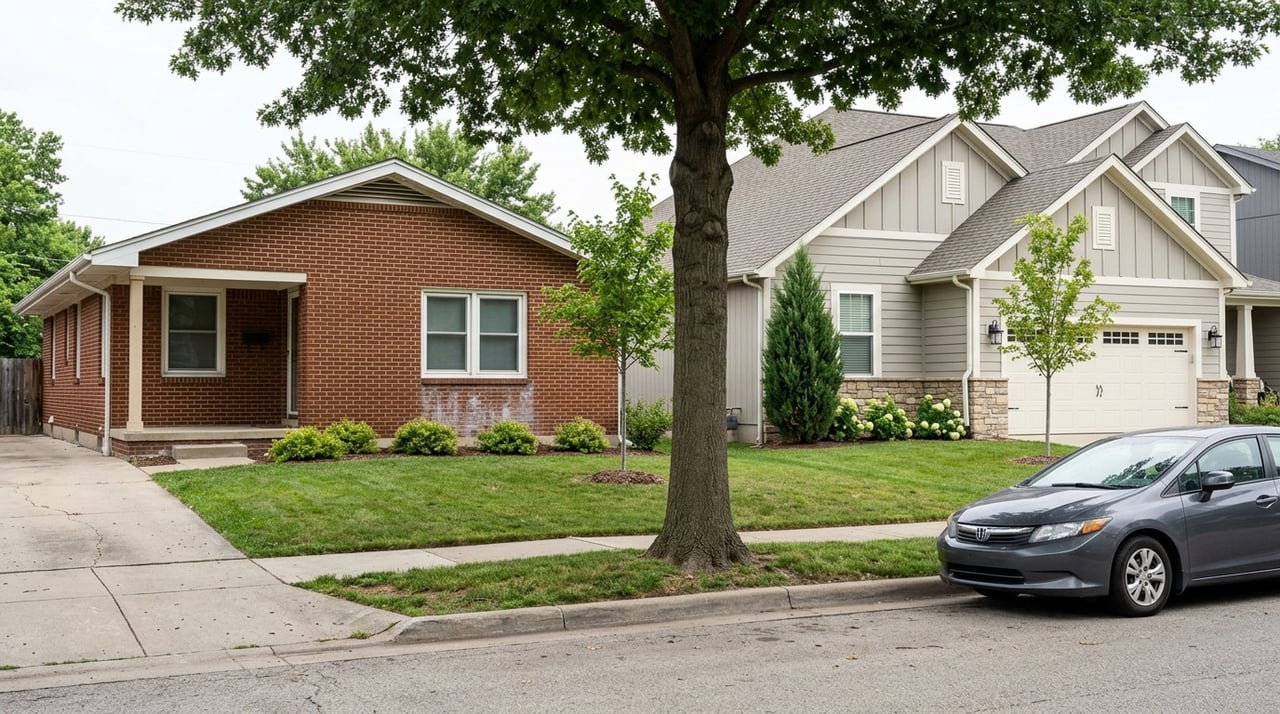
For you, that means the single-family rental conversation in Greeley is still mostly about detached homes. Attached options exist, but they play a smaller role. In many cases, buyers will be comparing older detached homes in established parts of the city rather than waiting for a large wave of brand-new detached inventory.
New supply is shifting toward multifamily
One interesting twist in Greeley is that newer housing supply has leaned more toward multifamily. The city’s planning materials say that most new residential units built since 2012 have been part of multifamily developments. The city’s March 2026 market update adds another clue: 281 multifamily units were permitted in Q4 2025, compared with just 12 in Q4 2024.
That does not erase the importance of single-family homes. It does suggest that future competition for renters may come from newer apartment and multifamily options more than from a flood of newly built detached rentals. If you are comparing properties, that is a useful lens for your underwriting.
What kind of investor story Greeley tells
Greeley is usually not pitched best as a pure cash-flow home run. Based on the data, it is more accurate to describe it as a lower-entry-price market with steady demand and a strong detached-home base. That can appeal to buyers who want a practical long-term hold in Northern Colorado without paying prices common in some neighboring markets.
In other words, this is often an affordability-and-demand story. You may like Greeley if your goals include buying a single-family property at a more moderate price point, serving a broad renter pool, and holding in a city with education and employment anchors. You should be more cautious if your entire plan depends on outsized gross yield from day one.
What to verify before buying
Before you get too attached to a property, make sure your investment plan matches local rules. The City of Greeley’s housing guide states that only one dwelling unit is permitted in single-family residential zoning. It also notes that some zones limit occupancy by unrelated adults.
That can affect how you think about roommate setups, house hacking, or conversion ideas. A property that looks flexible at first glance may not support the exact rental strategy you had in mind. This is one of the biggest reasons local due diligence matters.
Here are a few items worth confirming before closing:
- Zoning for the specific property
- Occupancy rules that may apply
- HOA restrictions, if any
- Expected operating costs, not just mortgage payment
- City code requirements that affect rental use
Those details can change the economics quickly. A home that looks promising on a listing sheet may tell a different story once you factor in real expenses and compliance limits.
A smart way to evaluate a property
If you are comparing single-family homes in Greeley, try to keep your review simple and disciplined. Start with the price, the likely rent range, and the condition of the home. Then move to the less visible items that affect ownership costs over time.
A practical review should include:
- Purchase price relative to local median sales
- Realistic rent expectations based on current market conditions
- Age and condition of major systems
- Insurance and property tax estimates
- Vacancy planning and maintenance reserves
- Any management costs if you will not self-manage
- Local zoning and occupancy fit
This kind of framework helps you avoid overreacting to one appealing feature. A lower list price is great, but only if the property still works after the full expense picture comes into focus.
Is Greeley a fit for your goals?
Greeley can make sense if you want exposure to Northern Colorado real estate in a market that remains more accessible than many parts of the state. It has a growing population, a meaningful renter base, educational anchors, and a diversified job market. It also has a housing history that keeps detached single-family homes at the center of the conversation.
The key is to approach it with the right expectations. This is generally not about chasing flashy numbers. It is about weighing affordability, rental demand, and property type in a city where entry costs may feel more manageable than elsewhere along the Front Range.
If you want help sorting through Northern Colorado opportunities, understanding how Greeley compares with nearby markets, or evaluating whether a specific home fits your goals, Robert Crow can help you think through the local market with a practical, relationship-first approach.
FAQs
Is Greeley good for single-family rental investing?
- Greeley can be appealing if you want a lower entry price than many Colorado markets and a broad tenant base supported by education, government, healthcare, logistics, manufacturing, and professional services.
What makes Greeley different from other Colorado markets?
- Greeley stands out for relative affordability, with a lower median home value than Colorado overall, while still offering established rental demand and a strong base of detached housing.
Are detached homes common in Greeley?
- Yes. City planning data show Greeley has historically leaned toward single-family detached housing, even though more recent new development has shifted toward multifamily.
Is Greeley more of a cash-flow or appreciation market?
- Based on the available data, Greeley is better described as a lower-entry-price, moderate-rent market where affordability and steady demand are often bigger factors than standout gross yield.
What should you verify before buying a rental in Greeley?
- You should confirm zoning, occupancy limits, HOA rules, operating expenses, and any city code requirements that could affect how the property can be used as a rental.